







Commercial EV Chargers with MID meter
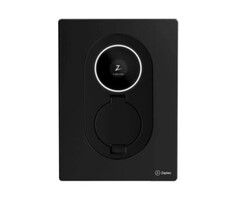
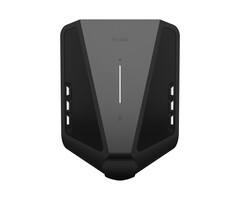
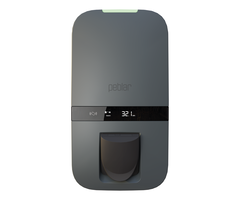
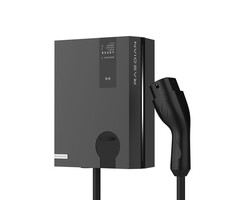
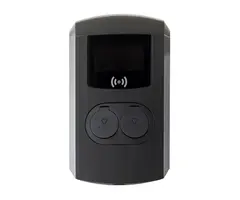
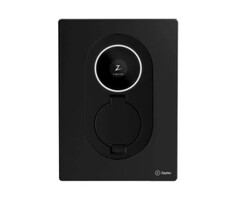

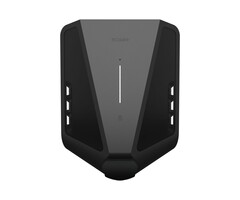
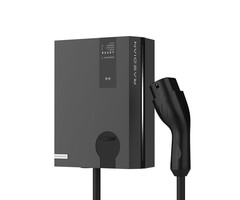

A commercial EV charger with MID meter provides the proof you need: every charged kWh is measured using a certified meter and recorded in a legally recognised way. This allows you to fairly reimburse charging sessions with your employer, leasing company or tax administration, and since 1 January 2026 you may be eligible in the Netherlands for the increased ERE compensation of approximately €0.10 per kWh for commercial charging infrastructure. At Wallbox Discounter, you will find a wide range of certified commercial EV chargers, with same-day shipping when ordered before 15:00. Each charger can be ordered separately or directly including installation by a certified installer.
What exactly does a commercial EV charger with MID meter do?
A MID meter is a certified kWh meter that complies with the European Measuring Instruments Directive. This means the measured electricity is officially and verifiably recorded, comparable to the meter in your electrical cabinet or at a fuel pump. For private use, a standard EV charger is usually sufficient, but as soon as a charging session needs to prove something financially, certified measurement is required.
Commercial EV chargers almost always combine MID metering with OCPP. This is the open communication protocol that connects the charger to a back office. This combination ensures that every session is recorded with a timestamp, a user identity — often through a charging card or RFID — and the exact number of kWh charged. This data is sent directly to a reimbursement service such as E-flux, Maxem or Shell Recharge, which handles reimbursement with your employer or leasing company.
Many commercial models also support ISO 15118, the communication standard between the vehicle and the EV charger. This enables Plug & Charge: simply plug in, with no charging card or app required to start a session. The vehicle automatically identifies itself to the charger, and the session is directly linked to your business account. Combined with the MID meter, this provides one of the most complete commercial charging solutions currently available.
ERE compensation and business reimbursement from 1 January 2026
Since 1 January 2026, the compensation structure for Emission Reduction Units (ERE) in the Netherlands has improved: for commercially charged kWh, you may receive approximately €0.10 per kWh as a contribution to the operation of charging infrastructure. This compensation is only possible if the measurement complies with the MID directive and the data is submitted through a registered booking service provider.
The reimbursement routes differ depending on the situation:
- Lease driver charging at home: the leasing company reimburses the kWh charged at home with the employer via E-flux or a similar service. A certified charger is required for this.
- Employee with own vehicle: business kilometres are reimbursed through a mileage allowance or the actual charging costs. A MID meter provides solid proof for the claim.
- Company location or employee parking area: charging sessions are billed per user, using a charging card or app. The back office separates business and private use.
- ERE registration: certified kWh data is submitted to the NEa via a booking service provider, after which the operator receives the compensation.
Who is a certified commercial EV charger suitable for?
The target group is broader than many people think. A MID meter is not a luxury, but a key requirement for anyone who wants to reimburse charging costs for business purposes.
- Lease drivers who charge at home and want their consumption reimbursed by their employer
- Entrepreneurs and self-employed professionals who want to substantiate business trips made with their electric vehicle
- Company locations with multiple charging points for employees and visitors
- Property owners and apartment associations that want to bill charging sessions per resident or tenant
- Fleet managers who want clear insight into costs per vehicle or driver
Many leasing companies now require a MID-certified EV charger for home charging connections linked to a lease contract. Not sure whether your lease contract requires this? Contact your leasing company before ordering.
Which models are available in this range?
The range consists of eight commercial models, with charging capacities from 7.4 kW (single-phase) to 22 kW (three-phase), available with either a socket or a fixed cable. All models include an integrated MID meter and OCPP, making them directly suitable for ERE registration.
| Model | Starting price | Power | Connection | Special feature |
|---|---|---|---|---|
| Alfen Eve Single Pro-line 7.4 kW | €599 | 7.4 kW | Single-phase, socket | Compact and reliable, Dutch manufacturer |
| Raedian NEO 22 kW | €749 | 22 kW | Three-phase, socket | Fast charging for business use |
| Easee Charge Max 22 kW | €795 | 22 kW | Three-phase, socket | Compact, switchable between power levels |
| Zaptec Go 2 22 kW (V2G-ready) | €819 | 22 kW | Three-phase, socket | Prepared for vehicle-to-grid |
| Peblar Business 22 kW | €949 | 22 kW | Three-phase | Solar mode, Dutch technology |
| Easee Charge Pro 22 kW | €995 | 22 kW | Three-phase, socket | Back-office functions, robust design |
| Smappee EV Wall Eichrecht 22 kW | €1,099 | 22 kW | Three-phase, socket | Eichrecht-certified, German market |
| Alfen Eve Double Pro-line 22 kW | €2,795 | 2x 22 kW | Three-phase, 2x socket | Two charging points in one station |
Do you want to charge two cars at the same time, or are you planning a second connection at the office? Then a double charging station or a setup with load balancing is a smart choice. With load balancing, the system automatically distributes the available power across multiple charging points, so you never overload the main connection.
Tax aspects of commercial EV chargers in 2026
For 2026, the fiscal roadmap has changed in a number of areas:
- KIA (small-scale investment deduction): for investments between €2,901 and €387,580, you may receive an additional tax deduction. A commercial EV charger counts towards the total annual investment amount.
- VAT deduction: to the extent that the charger is used for business purposes, VAT is deductible. For mixed use, a proportional part applies.
- MIA and Vamil: charging stations for passenger cars and vans are no longer listed on the Environmental List from 1 January 2026. RVO refers charging infrastructure to the SPRILA subsidy.
- SPRILA 2026: the application period runs from 20 January through 18 December 2026. The previous cap of €350,000 per applicant has been removed, and the AC and DC budgets have been combined into a single fund. Applications are submitted through RVO.
Ask your accountant to calculate which scheme offers the greatest benefit for your situation. An investment in a certified charger can often qualify for multiple advantages at the same time.
Installation and back-office connection
A certified charger only delivers full value when the installation and back-office connection are set up correctly. With installation including mounting, a certified installer takes care of the connection, configuration and initial link with a reimbursement service such as E-flux, Maxem or Shell Recharge.
Important points to check in advance:
- Do you have a single-phase or three-phase connection? A 22 kW charger requires a three-phase connection. For single-phase, 7.4 kW is the logical choice.
- Do you need a second meter or a separate circuit? This depends on the capacity of your main connection.
- Which reimbursement service does your employer or leasing company use? Not every charger connects to every back office. We can advise you on this before you order.
- Do you want future expansion? With load balancing, you can add a second charger later without upgrading the main connection.
Frequently asked questions about commercial EV chargers with MID meter
What is the difference between a MID meter and a standard kWh meter?
A MID meter is certified according to the European Measuring Instruments Directive and provides legally recognised measurement values. A standard kWh meter gives an indication, but that data is not legally valid for reimbursement, billing or subsidy purposes.
Is a MID meter required for business reimbursement?
Yes. For business reimbursement of charging sessions and for ERE compensation of approximately €0.10 per kWh, the measured kWh must comply with the MID directive. Without a certified meter, leasing companies and the NEa may not accept the measurement data.
Can I make my existing EV charger MID-certified afterwards?
Usually not. The MID meter must be built in and certified at the factory. Replacing the charger is therefore often the only route. An external MID meter next to the charger can be a solution in specific cases, but ask your installer for advice.
How long does it take before ERE certificates are paid out?
The booking service provider periodically submits the data to the NEa, after which the compensation is settled through the operator of the charging infrastructure. In practice, there is usually a three- to six-month period between the charging session and the payout.
Order your commercial EV charger today
Choose the charger that matches your connection and reimbursement structure, or call us if you are unsure. Ordered before 15:00 means shipped today, with free shipping from €150. Would you prefer to consult our specialists first? In the meantime, compare the full commercial range or the broader selection of EV chargers with MID meter, including models for home use.