







EV Charger with fixed cable


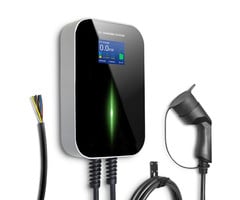
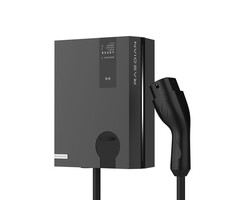
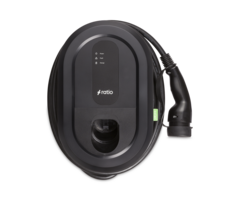
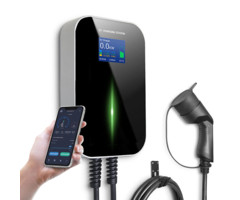
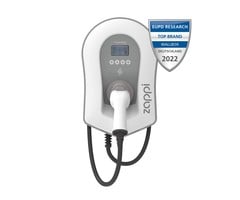
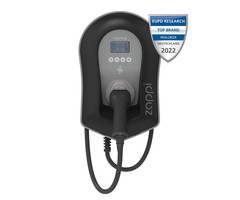
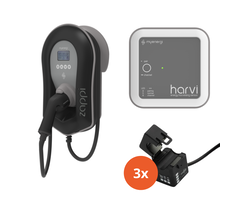
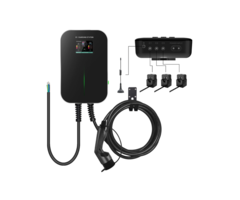
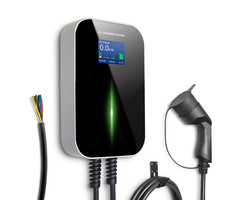
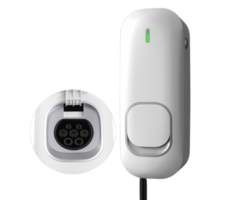
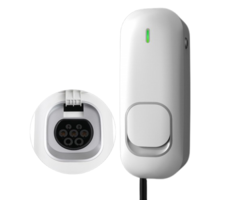
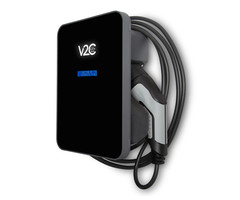
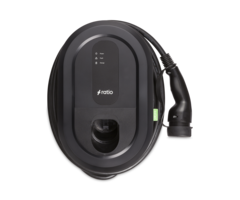
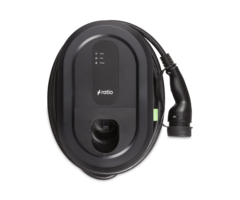
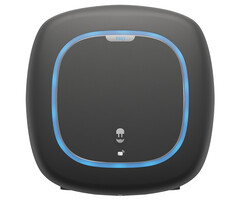
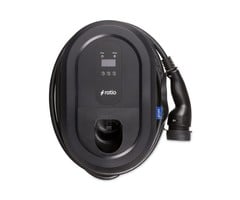
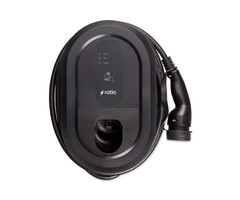
An EV Charger with fixed cable is always ready to use on your driveway. Simply grab the connector, plug it into your vehicle and charging begins. No need to take a separate cable out of the boot and no wet cable to roll up after a rain shower. At Wallbox Discounter, you will find more than 20 models with a fixed cable, offering charging capacities from 3.7 kW to 22 kW and cable lengths from 5 to 10 metres. At our most competitive prices, you can enjoy a complete charging solution at home. You can order the charger separately or including installation.
- Ordered before 15:00, shipped today
- Free shipping on orders above €150
- 21 models from Besen, Tesla, Wallbox, Myenergi, Ratio and more
- Type 2 connector, suitable for all modern electric vehicles in Europe
- Cable lengths of 5, 6, 7, 7.5 and 10 metres
What is an EV Charger with fixed cable?
An EV Charger with fixed cable features a charging cable that is permanently attached to the charger, with a Type 2 connector at the other end. For every charging session, you simply pick up the connector and plug it into your vehicle. The cable itself remains attached to the charging station. The alternative is a socket model, where you first connect a separate charging cable to the charger and then to the vehicle.
Who is a fixed cable charger suitable for?
Do you own an electric vehicle and mainly charge at home? Then an EV Charger with fixed cable is usually the most practical solution. You can connect your vehicle in seconds, even in the dark or during rainy weather. Do you regularly switch vehicles, share the charger with neighbours or want to take your charging cable with you for public charging? In that case, a socket model may be the better option because it allows you to combine different cable lengths and configurations.
Cable length: 5, 6, 7 or 10 metres?
The cable length determines how far your vehicle can be parked from the charger. Our range includes fixed cables from 5 to 10 metres, with 5 and 6 metres being the most popular choices. For most driveways, this is more than sufficient. Before purchasing, measure the distance between the planned charger location and your vehicle's charging port. Keep in mind that the charging port may be located at the front, rear or side depending on the vehicle model. Do you park in different positions or is the charger located further away? Then 7, 7.5 or 10 metres may be a better choice. Do you also need a separate cable for public charging? Take a look at our range of Type 2 charging cables.
Charging power and number of phases
The fixed cable chargers in this category are available with charging capacities of 3.7 kW, 7.4 kW, 11 kW and 22 kW. The right power level depends on your electrical installation and your vehicle.
- 3.7 kW (single-phase, 16A): ideal for overnight charging and smaller batteries
- 7.4 kW (single-phase, 32A): comfortable daily charging on a single-phase connection
- 11 kW (three-phase, 16A): the most popular option for three-phase installations
- 22 kW (three-phase, 32A): maximum charging speed, provided your vehicle and connection support it
A three-phase connection distributes electricity across three separate phases, allowing higher charging speeds without requiring a heavier main connection. Unsure whether you have a single-phase or three-phase connection? Check your electricity meter or ask your installer. More information can be found on our page about EV Charger including installation.
Advantages and disadvantages compared to a socket model
Both options work perfectly well, but the difference comes down to convenience versus flexibility. Advantages of a fixed cable:
- Fast and easy to use: only one action required for each charging session
- No charging cable taking up space in your vehicle's boot
- Less wear on the charger-side connectors
- Cable and charging power are perfectly matched
Disadvantages:
- Fixed length: you are limited to the cable length supplied with the charger
- If damaged, the cable must be replaced through a service procedure
- The cable remains outdoors and is exposed to weather conditions
- Less convenient if you regularly switch between different vehicles
Models and brands in the range
You will find EV Chargers with fixed cable from Besen, Tesla, Wallbox, Myenergi, Ratio Electric, Loady, Raedian and V2C. Many models include smart features such as RFID access control, Dynamic Load Balancing, app connectivity and an integrated MID-certified kWh meter. Would you like to charge your electric vehicle using your own solar energy? Then the Myenergi Zappi and Ratio Solar are excellent options.
With Dynamic Load Balancing, the charger continuously measures the available capacity in your electrical installation and automatically adjusts the charging power. This prevents your main fuse from tripping when appliances such as washing machines, dishwashers or ovens are running simultaneously. A MID meter is a certified electricity meter that allows charging sessions to be reimbursed or billed officially, for example through your employer. Some fixed cable chargers also support ISO 15118, the communication standard behind Plug & Charge and future bidirectional charging technology. Within this range, the Tesla Wall Connector Gen 3 and Wallbox Pulsar Pro are among the models prepared for this functionality.
Comparison of popular models
| Model | Price | Power | Cable | App | Special feature |
|---|---|---|---|---|---|
| Besen 3.7 kW | €349 | 3.7 kW | 6 metres | No | Most affordable entry-level model |
| Loady Pulse 11 kW | €409 | 11 kW | 6 metres | No | Best value for money for three-phase charging |
| Besen Pro 11 kW | €649 | 11 kW | 5 metres | Yes | Includes Dynamic Load Balancing |
| Ratio Solid 22 kW | €629 | 22 kW | 5 or 7.5 metres | Yes | Robust 22 kW charger |
| Myenergi Zappi V2.1 22 kW | €879 | 22 kW | 6.5 metres | Yes | Charge using your own solar energy |
| Tesla Wall Connector Gen 3 MID | €569 | 22 kW | 7.3 metres | Yes | MID meter, suitable for reimbursement |
| Wallbox Pulsar Pro 22 kW | €899 | 22 kW | 5 metres | Yes | Compact and powerful |
Looking for a charger with a certified kWh meter for business reimbursement? Then explore our range of EV Chargers with MID meter. For residential charging, our Home EV Charger category offers a broader selection, including socket models.
Frequently asked questions about an EV Charger with fixed cable
What cable length do I need?
Measure the distance between the planned charger location and your vehicle’s charging port, then add approximately half a metre as a safety margin. For most driveways, 5 or 6 metres is sufficient. If you park in different positions or the charger is located further away, 7, 7.5 or 10 metres may be a better option.
Can I use a fixed cable charger for public charging?
No. Public charging stations generally require a separate charging cable because they use a socket connection. A separate Type 2 charging cable of 5 or 8 metres is usually sufficient for public charging.
Is an EV Charger with fixed cable more expensive than a socket model?
The purchase price is often slightly higher because the charging cable is already included. However, when you add the cost of a separate charging cable for a socket charger, the overall investment is usually very similar. It is therefore best to choose based on convenience rather than price alone.
Need advice?
Not sure about the ideal cable length, charging capacity or brand? Contact us by phone or WhatsApp for personal advice. Our charging specialists will be happy to help you choose the right charger. Order before 15:00 and your order will be shipped the same day.