







Mobile EV Charger type 2
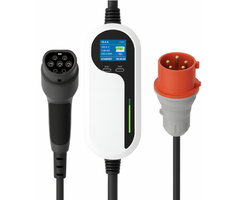
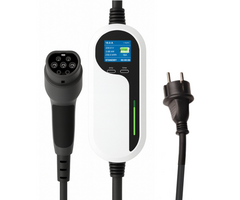

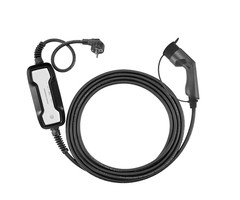
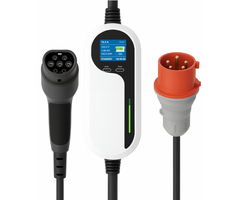
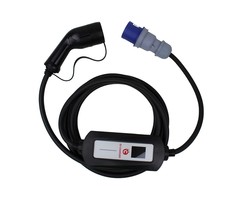
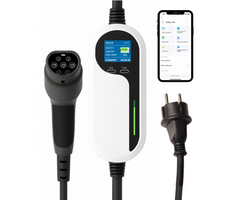
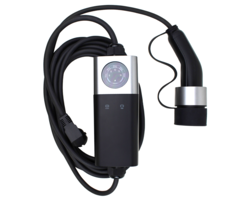
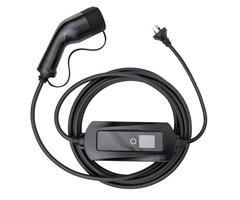
Type 2, also known as Mennekes, is the European standard connection for AC charging. Almost every modern electric car has this connection. A mobile Type 2 EV charger allows you to charge your vehicle from a suitable socket without installing a fixed EV charger or requiring a permanent charging location. The main choice is the mains plug on the other end of the charger: Schuko for a suitable domestic socket or CEE for a correctly rated electrical connection.
- Models from Loady, Besen and EVshield with Schuko or CEE plugs
- Adjustable current, usually between 6 and 16 A
- Ordered before 15:00, dispatched today
Schuko or CEE: which should you choose?
| Plug | Where do you connect it? | Power |
|---|---|---|
| Schuko | A suitable domestic socket with wiring and a circuit designed for the selected continuous load | Up to 3.7 kW at 16 A, adjustable down to 10 A when necessary |
| CEE | A suitable CEE socket with the correct protection, professionally installed by an electrician | 7.4, 11 or 22 kW, depending on the CEE connection, charger, electrical supply and vehicle |
A CEE connection is not an ordinary domestic socket. When no suitable CEE connection is available, you can use a portable Schuko charger with a suitable socket. For regular, faster and more convenient charging, a fixed EV charger at home is usually the more logical solution.
Check the socket and circuit when charging through Schuko
Setting the portable EV charger to 10 A places less strain on the electrical installation than charging at 13 or 16 A. However, the socket, wiring, protective devices and complete electrical circuit must still be in good condition. You should also avoid using other high-power appliances on the same circuit while the vehicle is charging.
For regular or continuous charging above 10 A, we strongly recommend using a dedicated and professionally inspected circuit. Whether this is strictly required depends on the existing electrical installation and local regulations. Have a qualified electrician assess the situation.
Pay particular attention to the wiring and contacts behind the socket. Old, damaged, loose or unsuitable sockets can become very hot during several hours of continuous high load. This can cause damage and, in the worst case, a fire. When you are unsure about the condition of the socket, reduce the charger to 10 A and have the connection inspected. This is exactly why adjustable current is useful.
Frequently asked questions about portable Type 2 EV chargers
How quickly does a mobile Type 2 EV charger charge?
Charging can take anywhere from a few hours to more than a day. The charging time depends on the output of the portable EV charger, the battery capacity, the maximum AC charging power accepted by the vehicle and the connection being used.
Through Schuko, you normally charge at up to 2.3 kW at 10 A or theoretically up to 3.7 kW at 16 A. However, not every domestic socket is suitable for a continuous 16 A load. Depending on the model, a suitable CEE connection can provide 7.4, 11 or 22 kW.
Does an ISO 15118 requirement also apply to a portable EV charger?
A portable EV charger with an integrated control and protection device normally operates in charging Mode 2. These IC-CPD charging devices are covered by requirements including IEC 62752. Fixed AC EV chargers generally operate in charging Mode 3, while DC fast-charging stations operate in Mode 4.
ISO 15118 requirements that apply to certain charging points therefore cannot automatically be applied to a portable Mode 2 charger. The European AFIR regulation also primarily concerns publicly accessible charging infrastructure and does not automatically apply to every privately used portable charger or fixed home EV charger. When purchasing a fixed EV charger, it is nevertheless advisable to check which communication standards it supports. In particular, check whether it supports only ISO 15118-2 or also the newer ISO 15118-20.
Can I use an extension cable?
You should not use an ordinary domestic extension lead or cable reel between the socket and a portable EV charger. Additional plug connections increase electrical resistance and therefore increase the risk of heat, voltage loss and damage.
When the charger cable is too short, use only a solution specifically intended for charging an electric vehicle and approved by the charger manufacturer. The maximum permitted length depends on the product, cable cross-section, electrical connection and manufacturer’s instructions. A universal maximum length of 15 metres therefore does not apply to every portable charger. Depending on the model, Wallbox Discounter offers portable EV chargers with cables of 5, 10 or 15 metres.
Is a mobile Type 2 EV charger suitable for an older electric car?
Only when the vehicle has a Type 2 charging port. Some older Asian and American electric vehicles and plug-in hybrids use a Type 1 connection. These vehicles require a portable Type 1 EV charger.
Do I need an electrician for a CEE charger?
The portable EV charger itself does not require fixed installation. However, the CEE socket and corresponding electrical circuit must be correctly rated, protected and professionally installed. When no suitable CEE connection is currently available, you should always have one installed by a qualified electrician.
Can I permanently use the Mobile EV charger outdoors?
This depends on the IP rating and the manufacturer’s instructions for the specific model. Many portable EV chargers have a high IP rating, but plug connections should not be left in standing water or permanently exposed to mechanical strain. Always check the cable, plugs and socket for damage before use.
Are you unsure whether Schuko or CEE is more suitable for your situation? Contact us for personal advice by calling +31 074-7002114 or through WhatsApp.